Interview: Jessica Yinka Thomas, co-founder, past president and executive director of B Academics
Reflect on the milestones, memories, and best moments as we celebrate our 10 year anniversary! Hear from one of the B Academics co-founders and current executive director, Jessica Yinka Thomas, about the early days of building B Academics. Stay tuned for a new article each month for the remainder of the year as we celebrate our journey together.
Read 10 Year Anniversary Interview #1: The Founding of B Academics for the beginning of the B Academics story.
Following the initial launch, B Academics continued to build the community of academics studying B Corps. What were some of the early wins?
After the success of the first Roundtable in Philadelphia in 2016, the momentum built incredibly fast. In those early days, I would receive several inquiries a week from academics seeking to get engaged. We continued to host regular meetings to discuss our vision for the network and connect our community. In those early years, we called ourselves the Global B Corp Academic Community and we were operating under the umbrella of the Business Sustainability Collaborative in the Poole College of Management at NC State University, where I served as director.
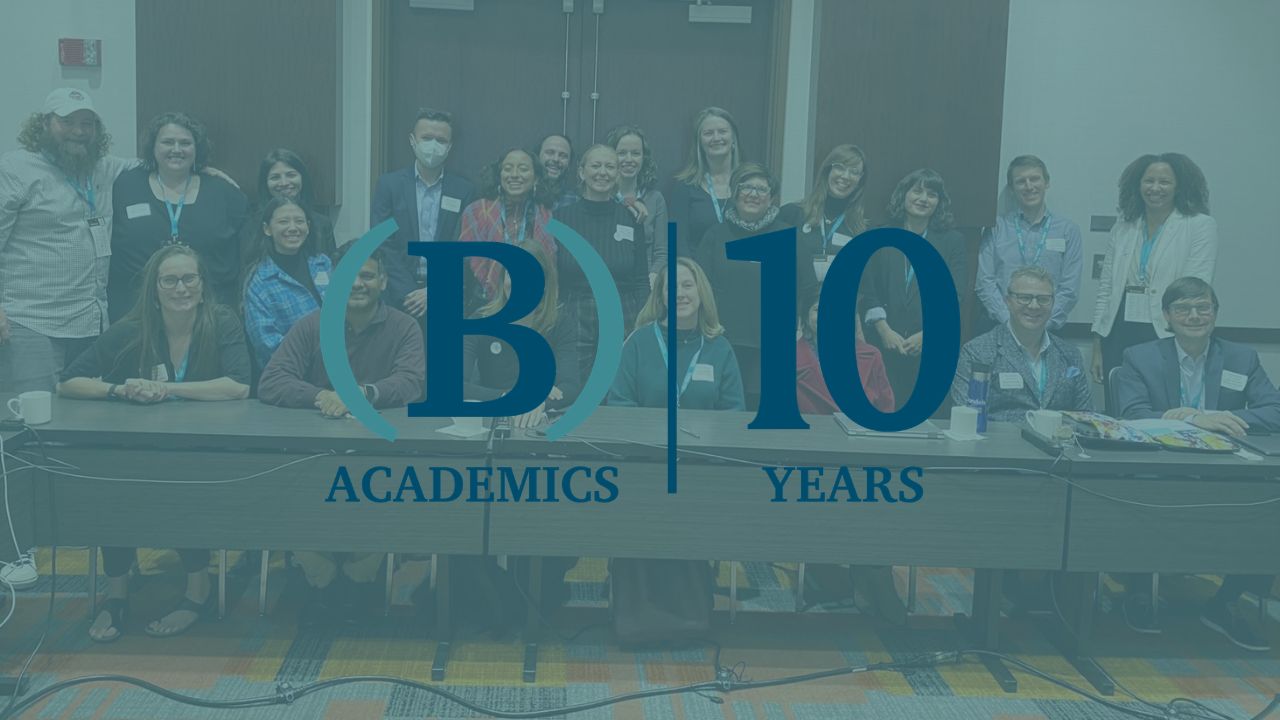
In 2017, we convened our second Global B Corp Academic Community Roundtable at the Rotman School of Management at the University of Toronto in parallel with the B Corp Champions Retreat. We were fortunate to attract an incredible network of highly engaged and committed academics to our work. Some of early B Academics champions were Fiona Wilson at University of New Hampshire, Jake Mosely at University of Georgia, Maria Ballesteros-Sola at Cal State Channel Islands, Emily Landry at Washington & Lee University, Garima Sharma at American University, Summer Brown at DePaul University, Kristin Joys and University of Florida and many others.
A true defining moment came in 2018, when we collaborated with Maria Emilia Correa, the co-founder of Sistema B and Academia B, to join efforts with Academia B to engage the academic community across Latin America. With that partnership, we nearly doubled our network to 2,000 academics with a shared focus around three core pillars:
1. Teaching: Sharing pedagogical resources and curricula related to B Corps and the B Corp movement to train the next generation of purpose-driven business leaders.
2. Research: Fostering rigorous, cross-border scholarship on how B Corps operate and scale within different economic and cultural landscapes.
3. Engagement: Creating pathways for students and faculty to work directly with local B Corps to solve real-world sustainability challenges.
We wanted to demonstrate that academia could play a core role in building an inclusive and regenerative economy.
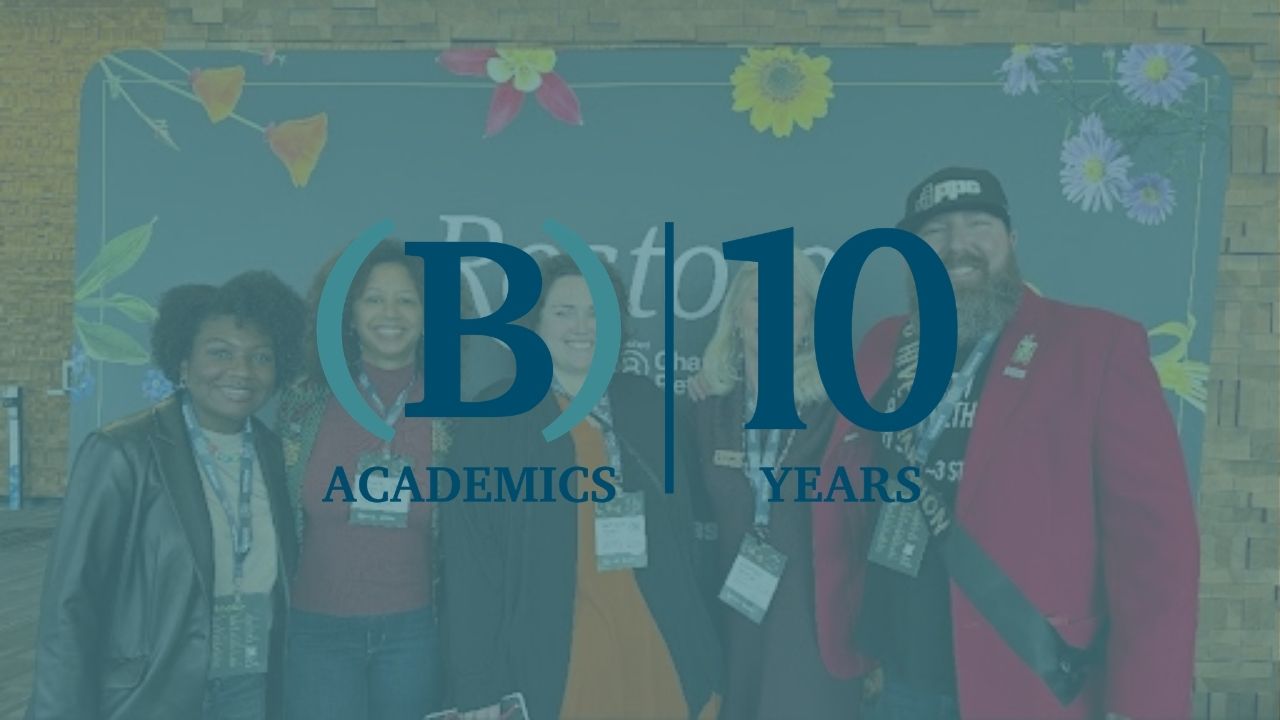
In 2018, we also hosted the 3rd annual Global B Corp Academic Community Roundtable in New Orleans alongside the B Local Communities Summit and the B Corp Champions Retreat. That’s the time period when we realized we were evolving into something much larger than a localized network and needed to formalize our community of practice.
2019 was a major turning point when B Academics formally incorporated as a non-profit. How did you navigate that achievement?
In a year-long effort led by Maria Ballesteros-Sola at Cal State Channel Islands, we explored almost a dozen different models to formalize our organization. We engaged experts ranging from Marshall Worshman, a PhD candidate at UC Berkeley to Bill Clark, the lawyer who developed the model benefit corporation legislation and extensively surveyed our network. We took a leap of faith to become an independent 501(c)3, formally incorporated in Washington, D.C. on October 10, 2019. I was honored to serve as the first President and Board chair of B Academics.
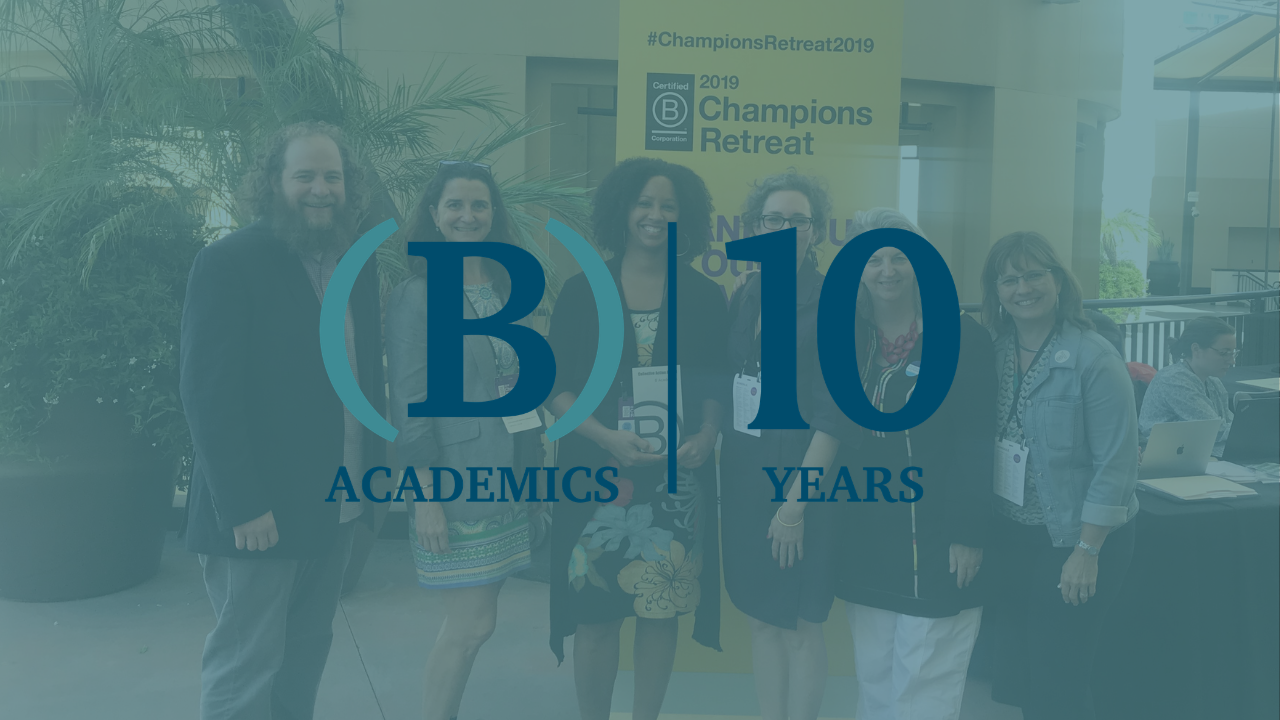
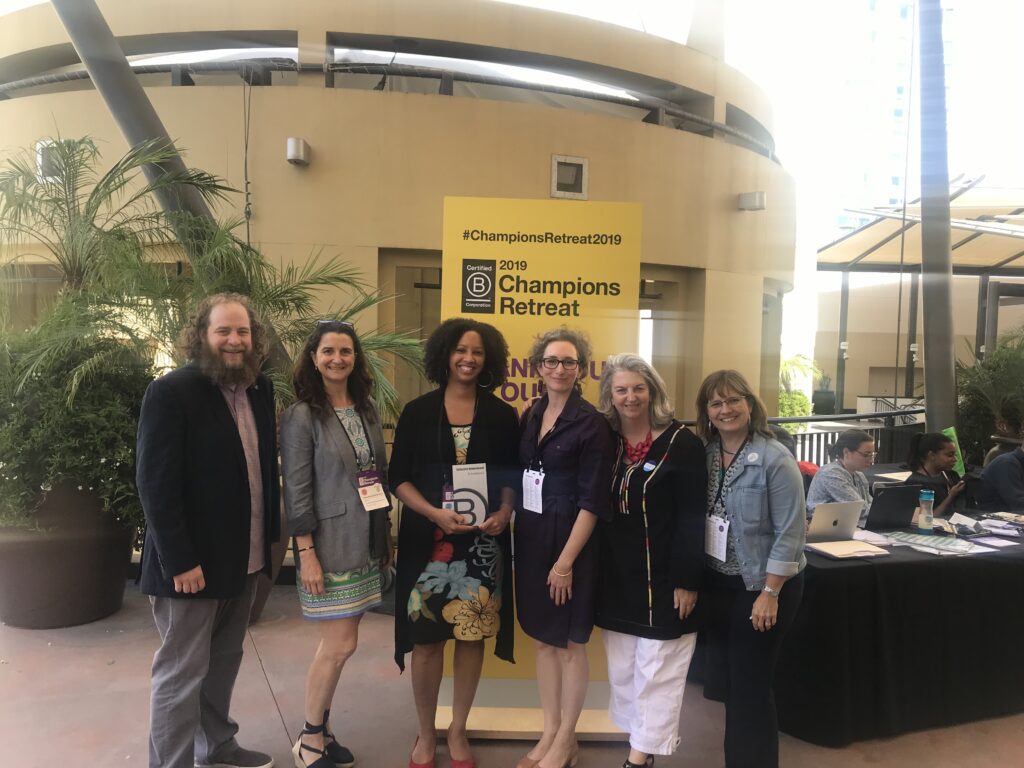
The ultimate validation of this collective effort came at the 2019 B Corp Champions Retreat in Los Angeles. While hosting our 4th annual Global B Corp Academic Community Roundtable: “Seeing the Full Picture: Drivers, Processes and Outcomes of the B Corp Movement,” alongside the broader B Corp community, B Academics was honored with the B Lab Collective Action Award, recognizing our role in driving systems change and impact. It was a profound moment of recognition that we were an important driver in the broader global B Corp movement.
What did engagement with B Lab and B Corps look like during those early years?
We were fortunate to collaborate with committed B Corp partners to build some of our early key infrastructure. Kevin Christopher at Rockridge Venture Law provided pro bono expertise to handle our legal incorporation as a 501(c)3 nonprofit. Sirena Andras at Creative Chi breathed life into our visual identity by working with us to develop our first formal B Academics branding. We even anchored our values financially by opening our first bank account with Beneficial State Bank, where Manny Barragan-Alcaraz remains our trusted banker to this day.
B Lab was very engaged during those early years. Craig Dalen, a Senior Fellow at B Lab who created their B Corps on Campus initiative, was a strong supporter and worked with us to formalize the B Impact Teams model. Michele Bradley, who was a Measurement and Evaluation Data Analyst at B Lab was also an important resource in providing access to B Lab data. And the B Lab founders, Bart Houlahan, Jay Cohen Gilbert and the late Andrew Kassoy were strong champions of academic engagement in the B Corp movement.
Reflecting on those early years and seeing where we are today, it is clear that our foundation was built on a truly unique ecosystem of collaboration. The strength of B Academics has always been the deep, interconnected engagement from every corner of this movement—the rigorous insights of our academics, the passion and energy of our students, the real-world innovation of B Corps, and the strong support of B Lab. It is this shared commitment to uniting research, teaching, and practice that has driven our success from day one, and it remains the driving force behind our global impact today as we continue to reshape the future of business for good.
Stay tuned for article #3.
 Upcoming Events